
Araştırma ve Kaynaklar
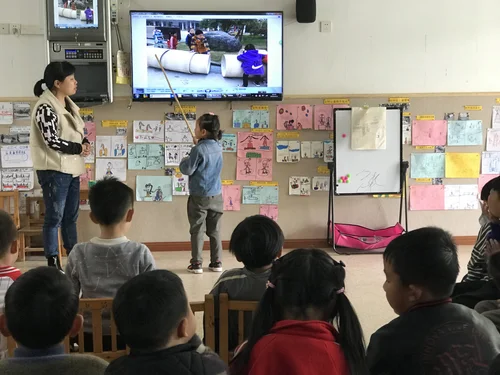
Anji Play programlarına uzun süreli olarak katılan çocukların gelişimsel sonuçlarını inceleyen geniş kapsamlı boylamsal çalışmalar henüz yürütülmemiştir. Bununla birlikte, çok sayıda vaka örneği, saha gözlemleri ve uygulama deneyimlerinden elde edilen birikim, güncel araştırmalarla birlikte değerlendirilerek eğitimcilerin zamanlarını ölçme ve sonuç odaklı değerlendirmelerden çok yaklaşımın geliştirilmesine ve uygulanmasına ayırmalarına olanak tanımıştır.
Anji’deki eğitimciler, nicel ve akademik araştırma sistemleri tasarlamayı öncelikli bir hedef olarak görmeseler de, yaklaşımın bilimsel olarak incelenmesine büyük bir açıklıkla yaklaşmaktadır. Bu nedenle araştırmacıların sahayı ziyaret etmeleri, yaklaşımı yerinde incelemeleri ve olası araştırma önerilerini paylaşmaları teşvik edilmektedir.
Anji Play ortamlarında hem öğretmenler hem de çocuklar sürekli bir keşif, deneme, gözlem ve yansıtma sürecinin içindedir. Bu yönüyle öğrenme ortamı, aynı zamanda yaşayan bir araştırma alanı gibidir. Çocuklar oyun yoluyla deneyimler üretirken, öğretmenler de bu süreci gözlemleyerek anlamaya ve yeniden yorumlamaya devam eder. Aşağıda, Anji Play ve temel ilkeleri ile ilişkili konuları ele alan önemli araştırma çalışmalarına ait kaynaklara ulaşabilirsiniz.
Carse, James P. "Finding a Place for Play in School." Teachers and Philosophy: Essays on the Contact Zone (2025).
Er, H., & Kandır, A. (2024). Erken Çocukluk Eğitiminde Yeni Bir Yaklaşım: Anji Play. VII. INCES, International Science, Culture and Education Congress (pp.129–141). Antalya, Turkey.
Lin, Xinya, et al. "Enhancing Cooperation in 5–6-Year-Old Rural Chinese Children through Cooperative Constructive Play Based on Anji Play: A Quasi-Experimental Study." Behavioral Sciences 14.7 (2024): 533.
Chen, Chen, et al. "Developing metacognition of 5-to 6-year-old children: Evaluating the effect of a circling curriculum based on Anji Play." International Journal of Environmental Research and Public Health 19.18 (2022): 11803.
Zhang, Jie, Mollie R. Clark, and Yeh Hsueh. "Free play and “loving care”: A qualitative inquiry of Chinese kindergarten teachers’ professional ethics." ECNU Review of Education 5.4 (2022): 664-682.
Gray, Peter, Autumn Erdahl Solomon, and Leah Tatgenhorst. "Public Libraries as Centers for Play: A Survey and Case Examples." American Journal of Play 14.2 (2022): 131-148.
Moffett, Chris. "The play of art: Propensity and pedagogy in contemporary Chinese early childhood education." Studies in Art Education 62.3 (2021): 222-235.
Coffino, Jesse Robert, and Chelsea Bailey. "The Anji Play ecology of early learning." Childhood Education 95.1 (2019): 3-9.
Fang, Jun-Jun. "Early Childhood Education in China." Handbook of International Perspectives on Early Childhood Education. Routledge, 2018. 162-174.
Cheng, X. "Anji Play on the Road to Reform| A profound revolution in children’s play." Anji Early Childhood Education (2017).
Brussoni, M., Gibbons, R., Gray, C., Ishikawa, T., Sandseter, E. B. H., Bienenstock, A., Chabot, G., Herrington, S., Janssen, I., Pickett, W., Power, M., Stranger, N., Sampson, M., & Tremblay, M. S. (2015). What is the relationship between risky outdoor play and health in children? A systematic review. International Journal of Environmental Research and Public Health, 12(6),6423-6454. DOI: 10.3390/ijerph120606423 (Available at: http://www.mdpi.com/1660-4601/12/6/6423)
Brussoni, M., Olsen, L.L., Pike, I., & Sleet, D.A. (2012). Risky play and children’s safety: Balancing priorities for optimal child development. International Journal of Environmental Research & Public Health, 9, 3134-3148. (Available at: http://www.mdpi.com/1660-4601/9/9/3134)
Gurholt, K. P., & Sanderud, J. R. (2016). Curious play: children’s exploration of nature. Journal of Adventure Education and Outdoor Learning, 1-12.
Lavrysen, A., Bertrands, E., Leyssen, L., Smets, L., Vanderspikken, A., & De Graef, P. (2015). Risky-play at school. Facilitating risk perception and competence in young children. European Early Childhood.
Little, H., Wyver, S., & Gibson, F. (2011). The influence of play context and adult attitudes on young children's physical risk‐taking during outdoor play.European Early Childhood Education Research Journal, 19(1), 113-131.
Niehues, A. N., Bundy, A., Broom, A., Tranter, P., Ragen, J., & Engelen, L. (2013). Everyday uncertainties: reframing perceptions of risk in outdoor free play. Journal of Adventure Education & Outdoor Learning, 13(3), 223-237.
Sandseter, E. B. H., & Kennair, L. E. O. (2011). Children's risky play from an evolutionary perspective: The anti-phobic effects of thrilling experiences.Evolutionary Psychology, 9(2), 147470491100900212.
Sandseter, E. B. H. (2007). Categorising risky play—how can we identify risk‐taking in children's play?. European Early Childhood Education Research Journal, 15(2), 237- 252.
Sandseter, E. B. H. (2009). Affordances for risky play in preschool: The importance of features in the play environment. Early Childhood Education Journal, 36(5), 439-446.
Sandseter, E. B. H. (2009). Characteristics of risky play. Journal of Adventure Education & Outdoor Learning, 9(1), 3-21. Sandseter, E. B. H. (2009). Risky play and risk management in Norwegian preschools—A qualitative observational study. Safety Science Monitor, 13(1), 1-12.
Sandseter, E. B. H. (2014). Early childhood education and care practitioners' perceptions of children's risky play; examining the influence of personality and gender. Early child development and care, 184(3), 434-449.
Buchsbaum, D., Bridgers, S., Weisberg, D. S., & Gopnik, A. (2012). The power of possibility: Causal learning, counterfactual reasoning, and pretend play. Philosophical Transactions of the Royal Society of London B: Biological Sciences, 367(1599), 2202-2212.
Cook, C., Goodman, N. D., & Schulz, L. E. (2011). Where science starts: Spontaneous experiments in preschoolers’ exploratory play. Cognition, 120(3), 341-349.
Gopnik, A., & Bonawitz, E. (2015). Bayesian models of child development.Wiley Interdisciplinary Reviews: Cognitive Science, 6(2), 75-86.
Gopnik, A., & Walker, C. M. (2013). Considering counterfactuals: The relationship between causal learning and pretend play. American Journal of Play, 6(1), 15.
Gopnik, A., Glymour, C., Sobel, D. M., Schulz, L. E., Kushnir, T., & Danks, D. (2004). A theory of causal learning in children: causal maps and Bayes nets.Psychological review, 111(1), 3.
Gopnik, A. (1990). Developing the idea of intentionality: Children's theories of mind. Canadian Journal of Philosophy, 20(1), 89-113.
Gopnik, A. (1996). The Post-Piaget era. Psychological Science, 7, 4, 216-221. (Special Piaget Centennial Issue). Gopnik, A. (1996). The scientist as child. Philosophy of Science, 63, 4, 485-514.
Gopnik, A. (2012). Scientific thinking in young children: Theoretical advances, empirical research, and policy implications. Science, 337(6102), 1623-1627. Gopnik, A. & D. Sobel (2000). Detecting blickets: How young children use information about novel causal powers in categorization and induction. Child Development, 71, 5, 1205- 1222.
Gopnik, A. & H. M. Wellman (in press). Reconstructing constructivism: Causal models, Bayesian learning mechanisms and the theory theory. Psychological Bulletin.
Gopnik, A. & H. Wellman (1992). Why the child’s theory of mind really is a theory. Mind and Language, 7, 145-171. Reprinted in M. Davies and T. Stone (Eds.) (1995) Folk psychology: The theory of mind debate. Oxford: Basil Blackwell.
Schulz LE, Bonawitz EB. Serious fun: Preschoolers engage in more exploratory play when evidence is confounded. Developmental Psychology. 2007; 43(4):1045–1050.
Weisberg, D. S., & Gopnik, A. (2013). Pretense, counterfactuals, and Bayesian causal models: Why what is not real really matters. Cognitive science, 37(7), 1368-1381.
Christakis, D. A., Zimmerman, F. J., & Garrison, M. M. (2007). Effect of block play on language acquisition and attention in toddlers: A pilot randomized controlled trial. Archives of pediatrics & adolescent medicine, 161(10), 967-971.
Cohen, L., & Uhry, J. (2007). Young children's discourse strategies during block play: A Bakhtinian approach. Journal of Research in Childhood Education, 21(3), 302-315.
Cohen, L. E. (2015). Layers of Discourse in Preschool Block Play: An Examination of Children’s Social Interactions. International Journal of Early Childhood, 47(2), 267- 281.
Eslami, Z. R., & Snow, M. The Use of Reading and Writing Materials by Bilingual and Monolingual English-Speaking Students in a Literacy-Enriched Block Center.
Ferrara, K., Hirsh‐Pasek, K., Newcombe, N. S., Golinkoff, R. M., & Lam, W. S. (2011). Block talk: Spatial language during block play. Mind, Brain, and Education, 5(3), 143-151.
Hanline, M. F. (2001). Supporting Emergent Literacy in Play-based Activities.Young Exceptional Children, 4(4), 10-15.
Neuman, S. B., & Roskos, K. (1990). Play, print, and purpose: Enriching play environments for literacy development. The Reading Teacher, 44(3), 214-221.
Neuman, S. B., & Roskos, K. (1992). Literacy objects as cultural tools: Effects on children's literacy behaviors in play. Reading Research Quarterly, 203-225.
Phelps, P., & Hanline, M. F. (1999). Let's Play Blocks!: Creating Effective Learning Experiences for Young Children. Teaching Exceptional Children,32(2), 64.
Pickett, L. (1998). Literacy learning during block play. Journal of Research in Childhood Education, 12(2), 225-230.
Roskos, K., & Christie, J. (2001). Examining the play–literacy interface: A critical review and future directions. Journal of Early Childhood Literacy, 1(1), 59-89.
Roskos, K. (1988). Literacy at work in play. The Reading Teacher, 41(6), 562-566.
Stroud, J. E. (1995). Block play: Building a foundation for literacy. Early Childhood Education Journal, 23(1), 9-13.
Wellhousen, K., & Giles, R. M. (2005). Building Literacy Opportunities into Children's Block Play What Every Teacher Should Know. Childhood Education, 82(2), 74-78.